


 Crazy Al Cayne
Can an Ozark Trail G1 gravel bike really survive a BMX race track? That was the question I wanted to answer when I took my upgraded, single-speed-converted Ozark Trail Explorer G1 to the BMX track for a full practice session.
This isn’t exactly what the G1 was designed for. We’re talking about a gravel bike with 700C wheels, and a setup that’s very different from a traditional 20-inch BMX race bike.
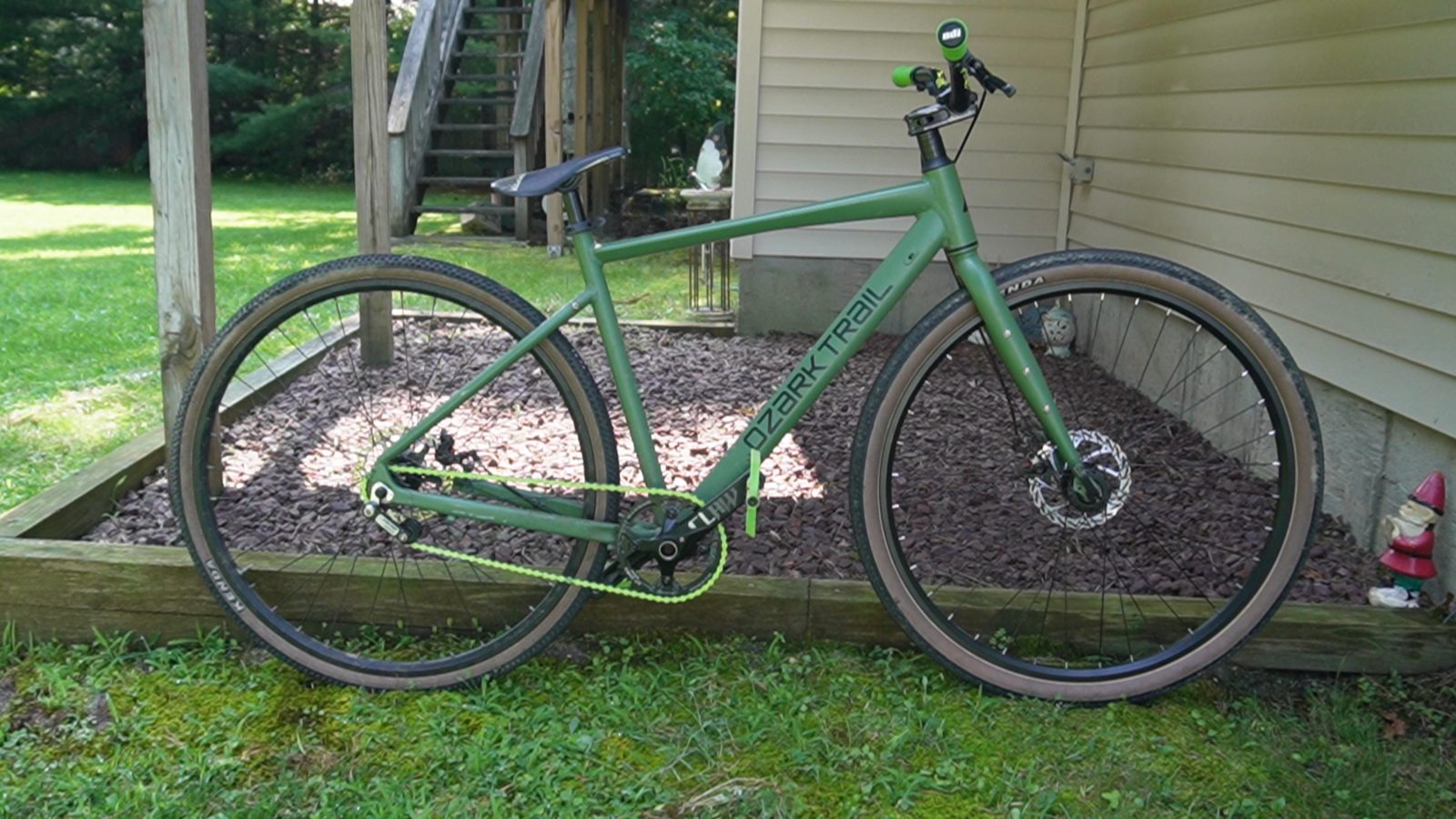
But I had already made some changes to the bike, including a single-speed conversion, MTB riser handlebars, and a BMX stem. I also upgraded the cranks and bottom bracket, so there was only one way to find out what it could actually do.
I took it to Shoreham BMX track, got in some gate starts, worked on manuals and pumps, jumped some of the track features, and kept putting laps in.
And surprisingly, the G1 held up.
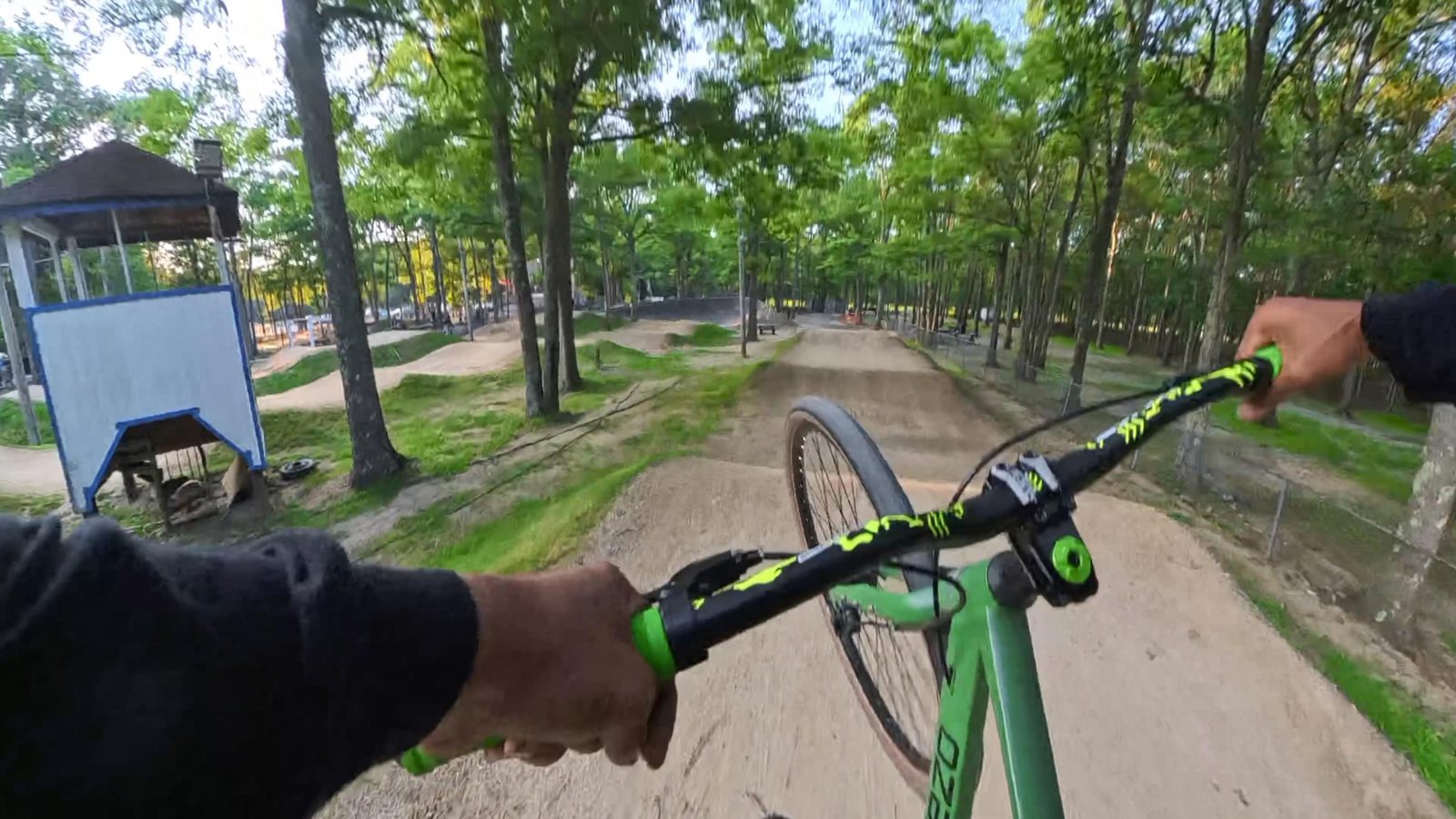
Taking the Ozark Trail G1 To The BMX Track
When I first got to the track, I was curious about several things.
The biggest question was the single-speed chain tension. Converting the G1 to a single speed meant there was no derailleur taking care of chain tension anymore. On a BMX track, that’s something you definitely want to pay attention to. If it’s done wrong the chain will be skipping and most likely coming off.
I also noticed that the chain was a little loose before getting started. Still, the bike was ready to go.
The G1 was running its bigger 700C wheels with a 45mm tire up front and a 40mm tire in the rear. That’s a very different setup from the typical gravel bike. But very common for BMX race bike setups.
And that’s part of what made this experiment interesting.
I wanted to turn the G1 gravel bike into a 700c BMX racing cruiser. And now it’s very close to how I want it. It was definitely at a point where I could see what would happen if I simply took this upgraded gravel bike and put it on a BMX track.
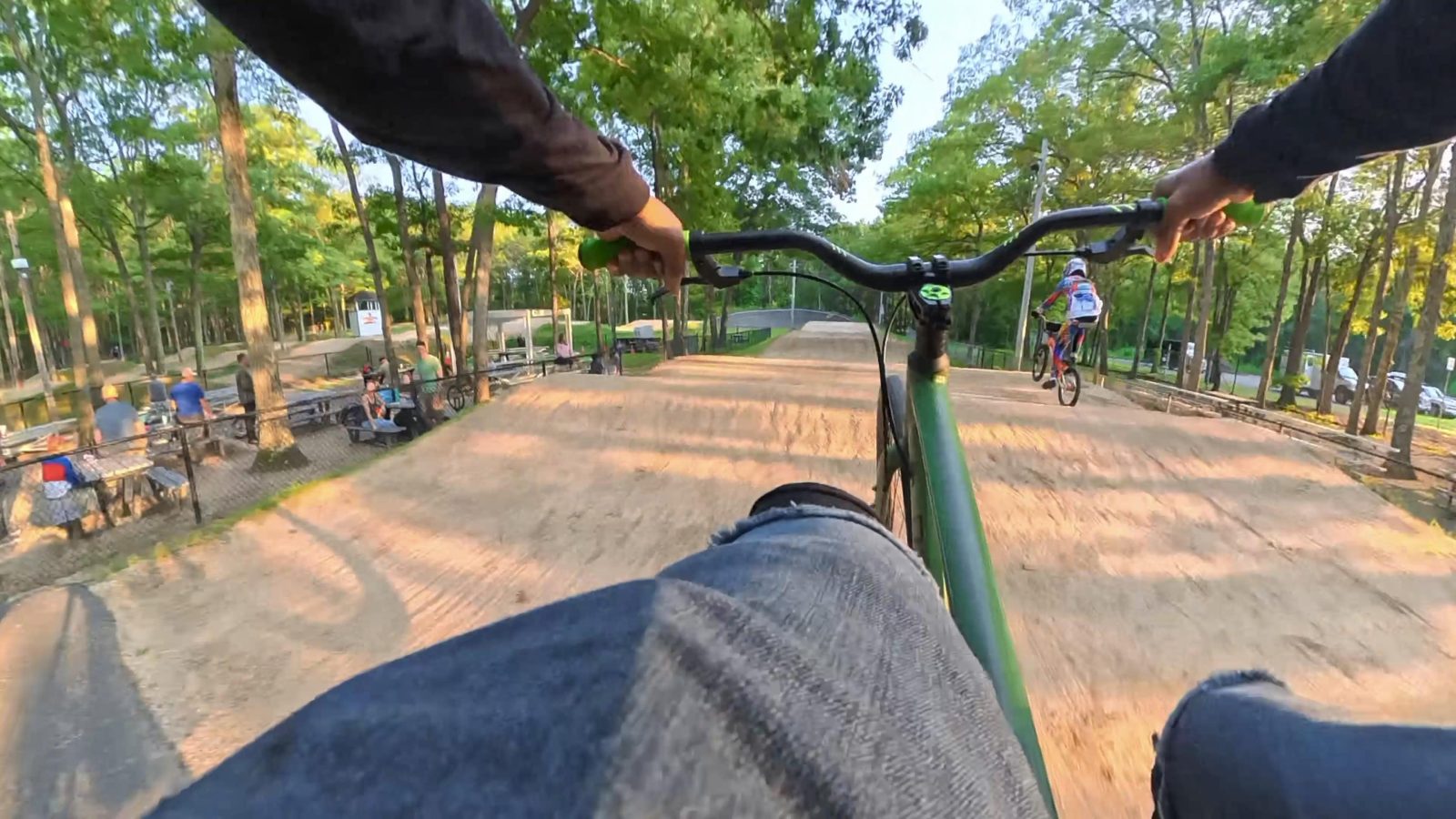
The First Few Laps Were A Little Sketchy
The first laps reminded me pretty quickly that riding a BMX track on a bike like this isn’t exactly the same as riding a 20-inch BMX.
I was getting back into the rhythm of the track, and one of the first things I noticed was the seat height. The seat was too high.
The bike is naturally tall, so I had to lower seat all the way because it was getting in the way when I was riding the track’s features. Once I lowered the seat, the bike started feeling more manageable.
The bigger wheels were also something I had to get used to. I just had to put more effort into maneuvers that are otherwise easy on a 20in as opposed to a 700c. And make sure I don’t crouch to low in order to avoid sitting on the rear wheel.
The Headset Came Loose
After a few laps, I noticed another issue. The headset had loosened up. That’s not something you want to deal with while riding hard on a BMX track, so I stopped and tightened it.
That small adjustment made a big difference. Once everything was tightened back up, the G1 felt much better and solid with now weirdness and noise. And that’s when things started getting interesting.
The Single-Speed Chain Tension Actually Worked
One of my biggest concerns before riding the track was whether the single-speed conversion would keep the chain under control. After getting several laps in, I was pleasantly surprised. The chain tension was working.
I was able to continue riding the track, doing gate starts, jumping features and putting more energy into the bike without the chain constantly becoming a problem. There was eventually one small issue—a pop from the chain—but overall the single-speed setup held up remarkably well during the session.
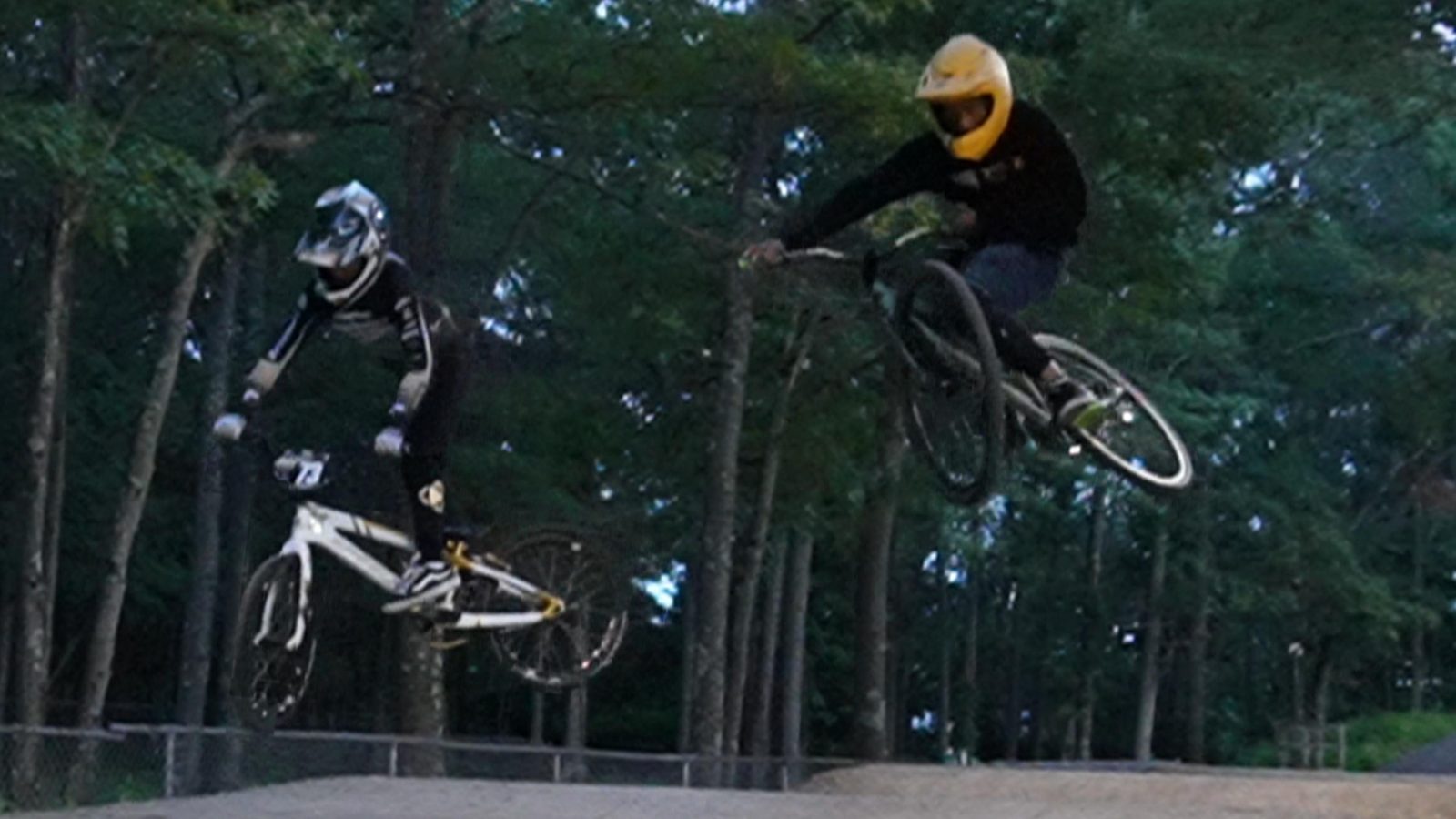
Can The Ozark Trail G1 Jump?
This was probably the most surprising part of the whole experiment. Once I got comfortable with the bike again, I started going faster and getting more air.
I worked on the last straight and started experimenting with the jumps. Some of the smaller features were manageable, and as I got more comfortable, I was able to get the bike into the air. I was actually jumping with a little style which felt really good. And the more I rode, the more comfortable I became.
The G1 was really at home on the jumps, and the upgraded parts made it even more comfortable in the air. It was handling the BMX track great!
The G1 Was Better At Jumping Than Manualing
After spending more time on the track, I started to figure out where the G1 worked best. The bigger wheels and overall setup works better when I was jumping rather than trying to manual and pump certain sections. The bigger jumps with deeper middles were harder to manual over. I wasn’t getting enough speed to try to jump the bigger jumps in the 2nd straight. But the 3rd straight had smaller rollers and I was able manual and pump right through
That’s one of the biggest takeaways from the session. If I was simply going down the track and jumping over features, the G1 felt pretty good.
But when I tried to use the bike in full race mode—manualing, pumping and working the track’s bigger sections—the limitations of the setup became much more noticeable.
The bike wasn’t built specifically for that type of riding. But it was still fun and doable.
Two Hours Of BMX Track Practice
The biggest test wasn’t one jump. It was the amount of time I spent riding.
I stayed at the track for roughly two hours, getting in laps, practicing gate starts, jumping and following other riders around the track. And the Ozark Trail G1 held up. That’s really what I wanted to know. Would the bike make it through an actual BMX practice session?
Yes.
The bike didn’t fall apart. The single-speed chain tension worked. I had to tighten the headset, and I got one pop from the chain, but otherwise the G1 stayed together and continued working throughout the session. For a budget-oriented gravel bike that had been modified for this experiment, that’s pretty impressive.
What I Changed On The Ozark Trail G1
This wasn’t a completely stock G1. The bike had been converted to a single-speed setup and equipped with mountain-bike handlebars, MTB cranks, and an outboard bottom bracket with riser bars and a BMX stem. Those modifications made a big difference in how the bike felt on the BMX track.
The riding position was much more appropriate and efficient for this type of riding than the original gravel-bike setup would have been. The single-speed conversion also simplified the drivetrain, although getting the chain tension exactly where I wanted it was still something I needed to work on. I was already thinking about using a half-link to fine-tune the chain length and tension for the next session.
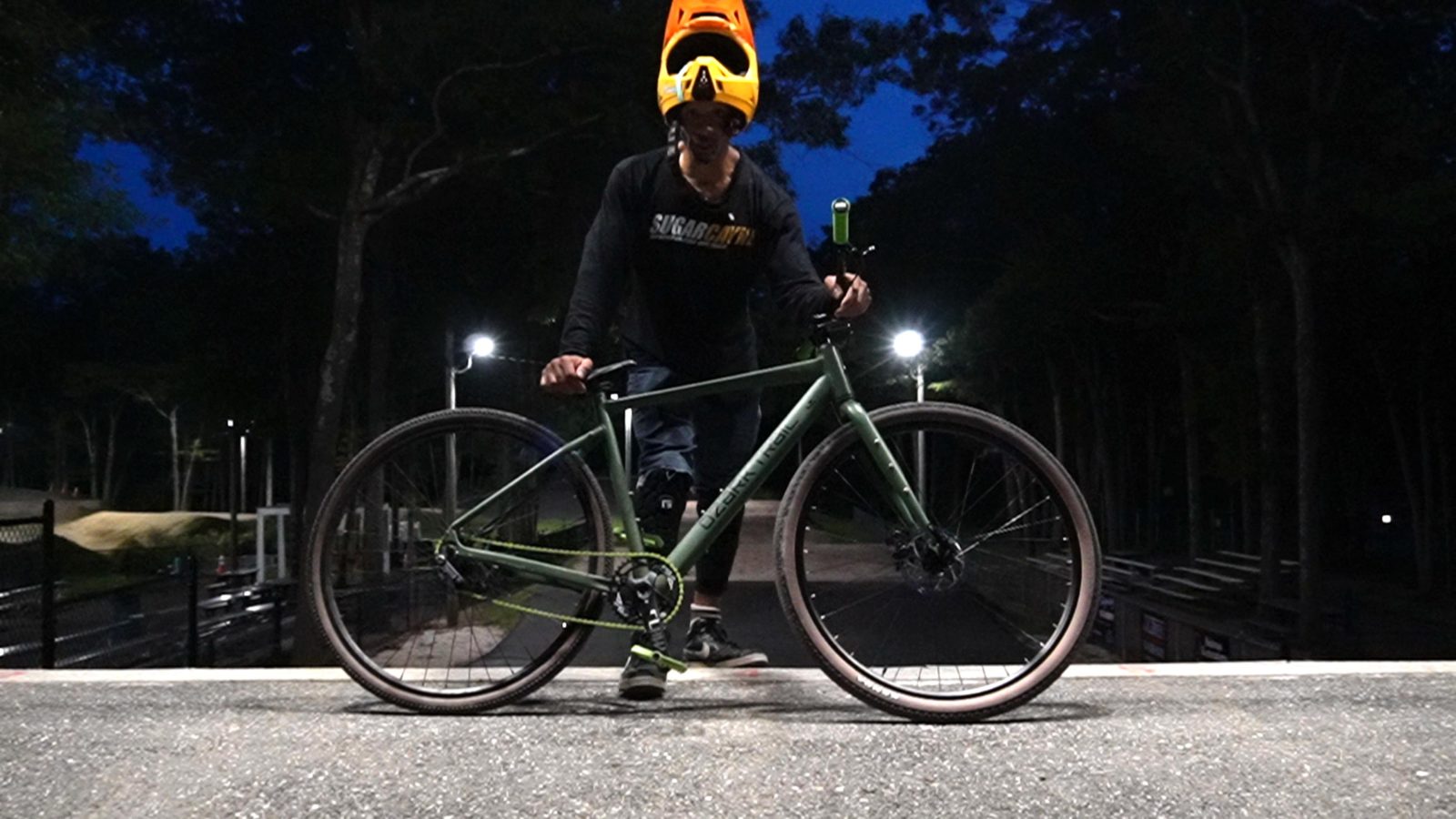
So, Can An Ozark Trail G1 Survive A BMX Race Track?
After this particular BMX track session, the answer is yes—with some important qualifications. The upgraded Ozark Trail G1 survived an extended practice session that included:
- Gate starts
- BMX track laps
- Jumps
- Manuals
- Pumps
- Rhythm sections
- Following other riders
- Multiple passes through the track
- Rougher BMX track features
The bike stayed together and continued working. The biggest mechanical issues I experienced were a loose headset that needed tightening and one pop from the chain tension. That’s a pretty good result considering what I was asking the bike to do.
But Is The G1 A BMX Race Bike?
An out the box completely stock G1 is not a BMX race bike. But with a few part changes it can definitely handle a BMX track. And the best part is, yes you can race with this bike with the upgrades. That’s what the BMX racing cruiser class is for. But of course, the G1 is still a natural gravel bike, and a BMX race bike is designed specifically around BMX racing.
The G1’s larger wheels and different geometry give it a completely different feel from a 20in BMX and even a 24 and 26in. I could definitely tell the difference when trying to manual and pump certain sections of the track.
But if you’re someone who owns an Ozark Trail G1 and you’re wondering whether you can take it to a BMX track and have some fun? This session showed that you can. Just don’t expect it to behave exactly like a BMX race bike.
The Bigger Wheels Were Actually Fun
I’m normally a 20-inch BMX guy, so riding the G1 with its bigger wheels was definitely different. But that’s also what made the experiment fun. I like the challenge of stepping out my comfort zone and trying different bike types doing BMX. And the G1 was actually good at it.
Final Thoughts: The Ozark Trail G1 Held It Down
After spending about two hours at the BMX track, doing gate starts, getting laps in and hitting jumps, I came away pretty impressed with the Ozark Trail G1. The bike survived the BMX track practice session. More than that, it was actually fun.
The single-speed setup worked well overall, the MTB-style cockpit made the bike more comfortable for the track, and the bigger wheels were capable of handling the jumps and track features.
There were definitely things I would improve. I’d want to dial in the chain tension, possibly use a half-link. And eventually I’ll put on some BMX cruiser bars to make the conversion complete.
But the basic experiment worked. The Ozark Trail G1 can hit the BMX track. It might not be a BMX race bike, but with the right upgrades and the right expectations, this gravel bike can do a lot more than you might expect. And the fact that this is a based on a $258 Walmart bike is crazy, And honestly, that’s what I love about this budget bike. Sometimes you just have to take something different to the track and see what happens.
So, can an Ozark Trail G1 gravel bike survive a BMX race track? Based on this ride: absolutely.